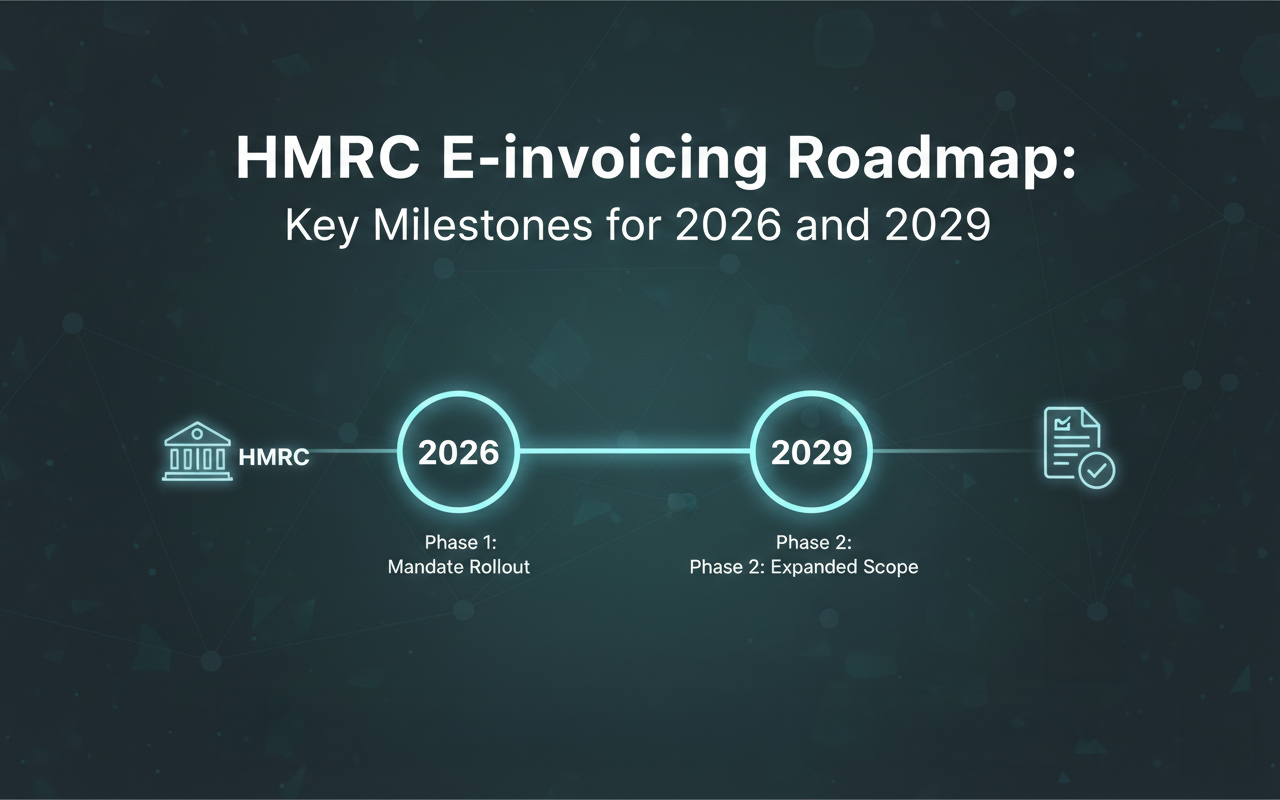
HMRC E-invoicing Roadmap: Key Milestones for 2026 and 2029
Stay ahead of the HMRC e-invoicing mandate. Explore the 2026 collaboration phase and the 2029 mandatory go-live dates for UK businesses.
The UK government has officially confirmed that mandatory e-invoicing for all VAT-registered businesses will go live on 1 April 2029. However, for large enterprises, the real work begins now. 2026 is the year of "Co-Design," where the technical framework and the final implementation roadmap will be established.
Why 2026 is the Critical Year for UK Finance Teams
While 2029 sounds far off, the UK Budget 2025 set in motion a strict timeline that requires immediate attention from IT and Finance departments.
January – June 2026: The Collaboration Phase
HMRC has launched a dedicated stakeholder group to co-create the UK e-invoicing model. This phase will determine:
- The Technical Standard: While all signs point to the PEPPOL BIS 3.0 standard, the final specifications will be confirmed during this period.
- Digital Link Requirements: Ensuring that there are no "broken links" in the data chain from invoice receipt to VAT filing.
November 2026: The Official Roadmap Publication
During the Autumn Budget 2026, the government will release the full implementation roadmap. This will include specific details on phased rollouts, where larger taxpayers are expected to be mandated first, potentially ahead of the 2029 "big bang" for smaller firms.
The Link to Making Tax Digital (MTD)
It is important to view e-invoicing as the final piece of the Making Tax Digital puzzle. From April 2026, the threshold for MTD for Income Tax Self Assessment (ITSA) drops to £50,000, bringing even more businesses into the digital net.
For large enterprises, the goal is "Digital Connectivity." HMRC’s focus is on ensuring that data moves seamlessly between systems without manual intervention—a requirement that makes an experienced integration partner essential.
How to Prepare Now
Waiting until the 2026 roadmap is published might leave your organisation in a "compressed timeframe" for transformation. We recommend:
- Auditing Supplier Readiness: How many of your top 100 suppliers can already send structured XML data?
- Reviewing Digital Links: Can your current ERP receive and archive e-invoices according to HMRC’s 6-year retention rule?
- Engaging with an Expert: Early pilots in 2027 will require a certified PEPPOL Access Point.
For a deep dive into the technical requirements and how this affects your specific ERP, see our Complete guide to UK e-invoicing
Stuart Clark
February 17, 2026
Book free live demo
Learn how the ECIT Digital solutions can help you with the help from one of our experts.


Frequently asked questions
Relevant articles

Best Kofax Alternatives for Invoice Processing and Document Capture (2026)

ECIT Digital partners with Taxera to bring global tax compliance to its customers
